“Tenang” Mobile Application for Student Self-Development and Emotion Monitoring
DOI:
https://doi.org/10.63318/waujpasv4i2_73Keywords:
Self-development, Emotion monitoring, Mental health, Chatbot, Flutter, DASS-21, Mood trackingAbstract
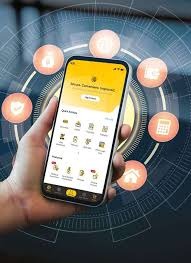
University students are a group whose mental health deserves attention, as academic and social demands expose them to stress, anxiety and emotional pressure. Existing mental health applications often centre on a single function, while the evidence on chatbot-based support is mixed and raises privacy and safety concerns. The purpose of this study is to design and develop “Tenang”, a mobile application for student self-development and emotion monitoring that brings together DASS-21 screening, daily mood tracking, an emotion journal, emotional history visualisation and a chatbot accompanying self-reflection. An online questionnaire filled in by 30 students chosen through purposive sampling provided the primary data, after which UML-based design was carried out and the application was implemented with Flutter, Supabase and PostgreSQL. A generative large language model accessed via the Gemini API drives the chatbot, whose system prompt restricts topics to emotional reflection and refers users showing crisis signs to professional help, while Row Level Security protects the conversations. According to the questionnaire, 83.3% of respondents had faced anxiety or stress caused by academic demands and 86.7% were prepared to use an emotion monitoring application regularly. All main functions specified in the requirements are performed by the application and its administrator website, and every Black Box Testing scenario returned the expected result. These findings demonstrate functional feasibility alone, without establishing effectiveness, usability or user satisfaction, and no systematic evaluation has yet been made of the quality and safety of chatbot responses. The application supports independent monitoring and self-development and is not intended for diagnosis or professional services.
Downloads
Downloads
Published
Issue
Section
License
Copyright (c) 2026 Authors

This work is licensed under a Creative Commons Attribution-NonCommercial 4.0 International License.
This journal uses Creative Commons Attribution-Noncommerical 4.0 International License (CC BY-NC 4.0), which permits use, sharing, adaptation, distribution and reproduction in any medium or format, as long as you give appropriate credit to the original author(s) and the source, provide a link to the Creative Commons license, and indicate if changes were made. To view a copy of this license, visit https://creativecommons.org/licenses/by-nc/4.0/.
Copyright of articles
Authors retain copyright of their articles published in this journal.