Thermal Comfort of Buildings Integrated Photovoltaics (BIPV)
DOI:
https://doi.org/10.63318/waujpasv4i1_16Keywords:
Double skin façade, Semi transparent photovoltaic, Thermal comfort, Glazing building, BIPVAbstract
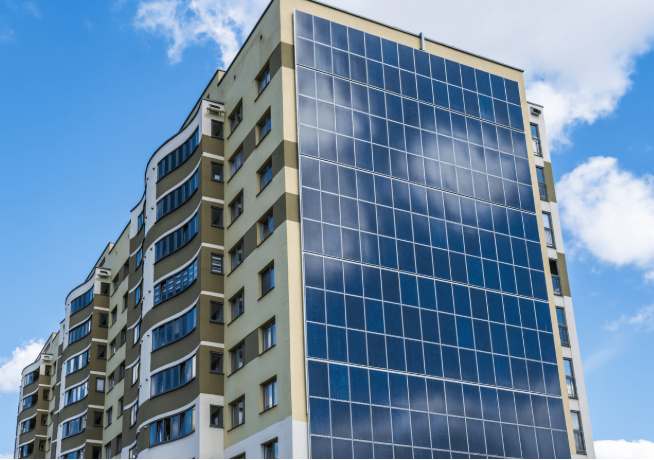
In today's modern world, the extensive use of glass façades in commercial buildings has an impact on the overall thermal comfort and energy consumption of these buildings, especially in regions where there is an energy shortage like Palestinian territories. The author is of the opinion that the use of BIPV systems will not only bring about the thermal comfort but also contribute to the overall energy efficiency of the commercial buildings. The work further cites the integration of photovoltaic cells in building skins and the related factors like heat transfer, thermal conductivity, and indoor thermal conditions are considered. The research signals the capabilities of double-skin and solar-integrated façades in cutting down the solar heat gain, cooling and heating load demands, and simultaneously providing on-site renewable energy. The emphasis is on Palestine, where the high solar radiation levels are in stark contrast to the political, economic, and infrastructural challenges in the energy sector. The paper integrates recent research on thermal comfort solutions, façade technologies, and photovoltaic integration, and shows that BIPV façades are a good option for energy consumption mediations and indoor environmental quality enhancement in commercial buildings. The results also clearly show that the installation of solar systems in the building envelop can be a great help in sustainable building design, energy security, and increased tenant comfort which in turn would support the transition to low and zero-energy buildings in Palestine and other similar climates.
Downloads
Published
Issue
Section
License
Copyright (c) 2026 The authors

This work is licensed under a Creative Commons Attribution-NonCommercial 4.0 International License.
This journal uses Creative Commons Attribution-Noncommerical 4.0 International License (CC BY-NC 4.0), which permits use, sharing, adaptation, distribution and reproduction in any medium or format, as long as you give appropriate credit to the original author(s) and the source, provide a link to the Creative Commons license, and indicate if changes were made. To view a copy of this license, visit https://creativecommons.org/licenses/by-nc/4.0/.
Copyright of articles
Authors retain copyright of their articles published in this journal.