A Preliminary Survey of Some Aquatic and Semi-Aquatic Insect species in Al-Jabal Al-Akhdar-Libya
DOI:
https://doi.org/10.63318/waujpasv4i1_37Keywords:
Aquatic and semi-aquatic insects, Physiochemical properties, Al-Jabal Al-Akhdar, LibyaAbstract
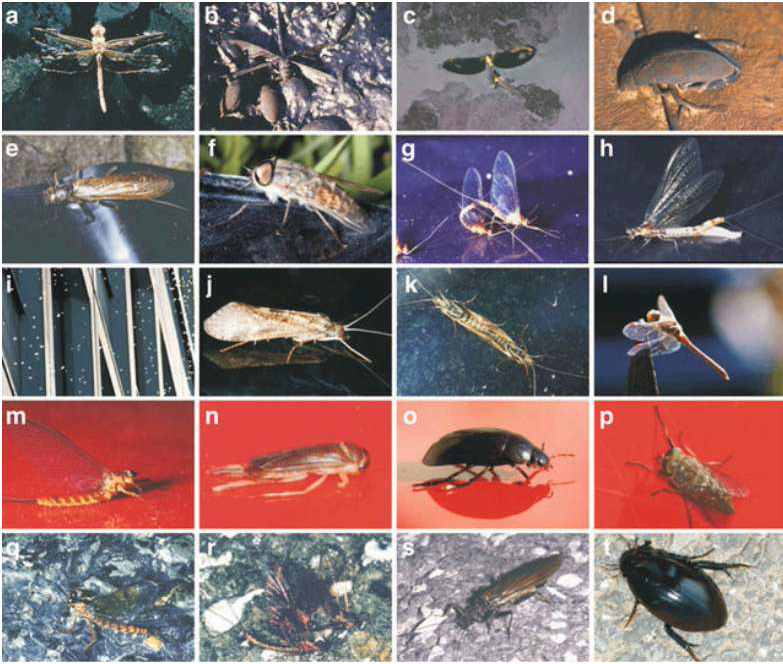
The study aim to survey and identify aquatic and semi-aquatic insects from water sources located in the in Al-Jabal Al-Akhdar region of northeastern Libya, in order to understand its biodiversity and utilize it as a biological indicator of water quality, the work was completed between July 2023 and June 2024, excluding September and October when tornado Daniel blocked the road. During this study collected 20 species, 16 specimens which were completely identified to species, 4 specimens to the genus and 1 at the family, all of them belong to 16 families and 6 orders. The results indicated significant differences between the study sites, with the highest population density (42%) of aquatic and semi-aquatic insects recorded in waters Fountain of Apollo. The results showed a difference in insect population density according to the months of the study. The average number of insects increased by 91.3% in November at Ain Barghu compared to the other months of the study. Insect populations also increased significantly during March averaging 49.3 and 47.0, in April averaging 50.0 and 54.3 for Fountain of Apollo and Ain al-Hofra, respectively. The results also showed that Hydroptila sp. represent a new record for Libya. The study also included measuring water temperature, pH, and total dissolved solids at each site. The average water temperature ranged from 19 to 26, pH from 6.1 to 7.8, and total dissolved solids from 315 to 487 parts per million at Ain al-Hofra, Fountain Apollo and Ain Barghu.
Downloads
Downloads
Published
Issue
Section
License
Copyright (c) 2026 The authors

This work is licensed under a Creative Commons Attribution-NonCommercial 4.0 International License.
This journal uses Creative Commons Attribution-Noncommerical 4.0 International License (CC BY-NC 4.0), which permits use, sharing, adaptation, distribution and reproduction in any medium or format, as long as you give appropriate credit to the original author(s) and the source, provide a link to the Creative Commons license, and indicate if changes were made. To view a copy of this license, visit https://creativecommons.org/licenses/by-nc/4.0/.
Copyright of articles
Authors retain copyright of their articles published in this journal.