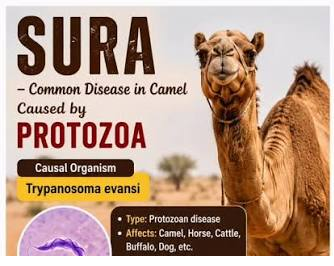
Surra Infection in Imported Camels: The First Detection in Southern Libya
DOI:
https://doi.org/10.63318/waujpasv4i2_15Keywords:
Trypanosoma spp, Camel trypanosomiasis, Prevalence, Epidemiology, BloodAbstract
Camel trypanosomiasis is considered one of the most important veterinary health problems worldwide. A parasitological investigation was conducted for the diagnosis of trypanosomiasis using Giemsa-stained thin blood smears. A total of 130 blood samples were examined, of which 115 samples (88.4%) were negative, while 15 samples (11.5%) were positive for Trypanosoma spp. This study represents the first documented record of camel trypanosomiasis in southern Libya. An epidemiological survey was carried out in March 2023 to estimate the prevalence of Trypanosoma spp. infection among imported dromedary camels (Camelus dromedarius) in Sebha City, southern Libya. To date, no published studies have reported trypanosomosis in this region. The results showed a higher prevalence of infection in male camels (6.9%) compared with females (4.6%). In addition, the infection rate was greater among male and female camels older than 10 years than among younger age groups. Microscopic examination of thin blood smears confirmed the presence of Trypanosoma infections regardless of age or sex. The findings of the present study indicate that trypanosomiasis is common in the investigated area. Considering these results, the potential health risks and associated diseases affecting camels warrant further attention and implementation of appropriate control measures.
Downloads
Downloads
Published
Issue
Section
License
Copyright (c) 2026 Authors

This work is licensed under a Creative Commons Attribution-NonCommercial 4.0 International License.
This journal uses Creative Commons Attribution-Noncommerical 4.0 International License (CC BY-NC 4.0), which permits use, sharing, adaptation, distribution and reproduction in any medium or format, as long as you give appropriate credit to the original author(s) and the source, provide a link to the Creative Commons license, and indicate if changes were made. To view a copy of this license, visit https://creativecommons.org/licenses/by-nc/4.0/.
Copyright of articles
Authors retain copyright of their articles published in this journal.