Linear Detection in 28 GHz Massive MIMO Uplink Systems
DOI:
https://doi.org/10.63318/waujpasv4i2_22Keywords:
Massive MIMO, MMSE, Zero Forcing(zf), Channel Estimation Error, 28 GHz mm Wave, 5G NetworksAbstract
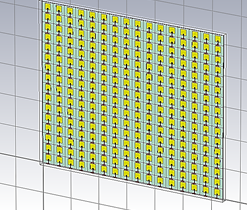
Massive Multiple-Input Multiple-Output (Massive MIMO) systems represent a cornerstone for meeting the high-performance demands of 5G and beyond networks. This paper presents a comprehensive simulation framework that effectively couples electromagnetic physical characteristics with signal processing algorithms in the uplink transmission. A 16x16 planar antenna array comprising 256 elements was designed to operate at the 28 GHz millimeter-wave band, achieving a high array gain of 32.27 dB alongside precise beamforming capabilities. To evaluate system performance under realistic operating conditions, the spectral efficiency and Bit Error Rate (BER) of three prominent linear detectors—Maximum Ratio Combining (MRC), Zero Forcing (ZF), and Minimum Mean Square Error (MMSE)—were analyzed in the presence of noise and imperfect Channel State Information (CSI). MATLAB numerical simulations demonstrate that the MMSE detector provides the optimal trade-off between performance and computational complexity, achieving a BER of 10^ {-4} at an SNR of 15{dB}. Conversely, the ZF detector exhibited severe performance degradation due to noise enhancement under channel estimation error conditions (sigma_e^2 = 0.01). These findings offer practical insights for selecting scalable detector architectures in future wireless networks.
Downloads
Downloads
Published
Issue
Section
License
Copyright (c) 2026 Authors

This work is licensed under a Creative Commons Attribution-NonCommercial 4.0 International License.
This journal uses Creative Commons Attribution-Noncommerical 4.0 International License (CC BY-NC 4.0), which permits use, sharing, adaptation, distribution and reproduction in any medium or format, as long as you give appropriate credit to the original author(s) and the source, provide a link to the Creative Commons license, and indicate if changes were made. To view a copy of this license, visit https://creativecommons.org/licenses/by-nc/4.0/.
Copyright of articles
Authors retain copyright of their articles published in this journal.