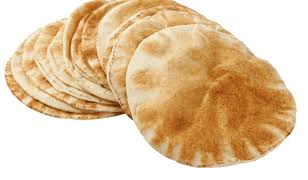
The Effect of Replacing Defatted Soybean Flour on the Chemical Composition and Sensory Properties of Arabic (Shami) Bread
DOI:
https://doi.org/10.63318/waujpasv4i1_45Keywords:
Defatted soybeans, Bread flour, Arabic bread (Shami), Chemical composition, Sensory propertiesAbstract
This study was conducted to evaluate the effect of replacing defatted soybean flour and to determine the best added proportions of soybean flour and its effect on the chemical compositions of Arabic (Shami) bread samples, as well as its effect on the sensory evaluation of the loaf of bread produced from the flour. The potential to improve bread quality in terms of increasing the nutritional value (proteins, carbohydrates, and minerals), improving the amino acid balance, and enhancing the sensory properties of bread loaves was explored. Partial replacement of wheat flour with defatted soybean flour at 0%, 5%, 10%, 15%, and 20% of the total flour weight was used to obtain composite bread samples. Several tests were conducted on the bread, including tests to determine the chemical composition and tests to assess the sensory properties of the bread. The experiment was designed according to a completely randomized design (CRD), and the Duncan multiple range test was used to determine significant differences between the means of the different treatments at a probability level of ≤ 0.01. The results of chemical tests of bread samples produced and partially replaced with soybean flour at rates of 5%, 10%, 15% and 20% showed a significant increase in the percentage of moisture, protein, ash and fat compared to the control sample (0%), which was accompanied by a significant decrease in the percentage of carbohydrates as the percentage of substitution increased. Meanwhile, the results of sensory evaluation of Arabic (Shami) bread samples showed The product with substitution ratios of 0%, 5%, 10%, 15% and 20%, that the best acceptance in terms of the total average of the sensory evaluation factors mentioned above was for the two types of bread with a substitution ratio of 15% (51.20) points compared to the control sample which was (48.91) points out of the general average of the total which is 63 points. This resulted in the development of a new product of Arabic (Shami) bread loaf with a good chemical composition, sensory properties and high nutritional value.
Downloads
Published
Issue
Section
License
Copyright (c) 2026 The authors

This work is licensed under a Creative Commons Attribution-NonCommercial 4.0 International License.
This journal uses Creative Commons Attribution-Noncommerical 4.0 International License (CC BY-NC 4.0), which permits use, sharing, adaptation, distribution and reproduction in any medium or format, as long as you give appropriate credit to the original author(s) and the source, provide a link to the Creative Commons license, and indicate if changes were made. To view a copy of this license, visit https://creativecommons.org/licenses/by-nc/4.0/.
Copyright of articles
Authors retain copyright of their articles published in this journal.